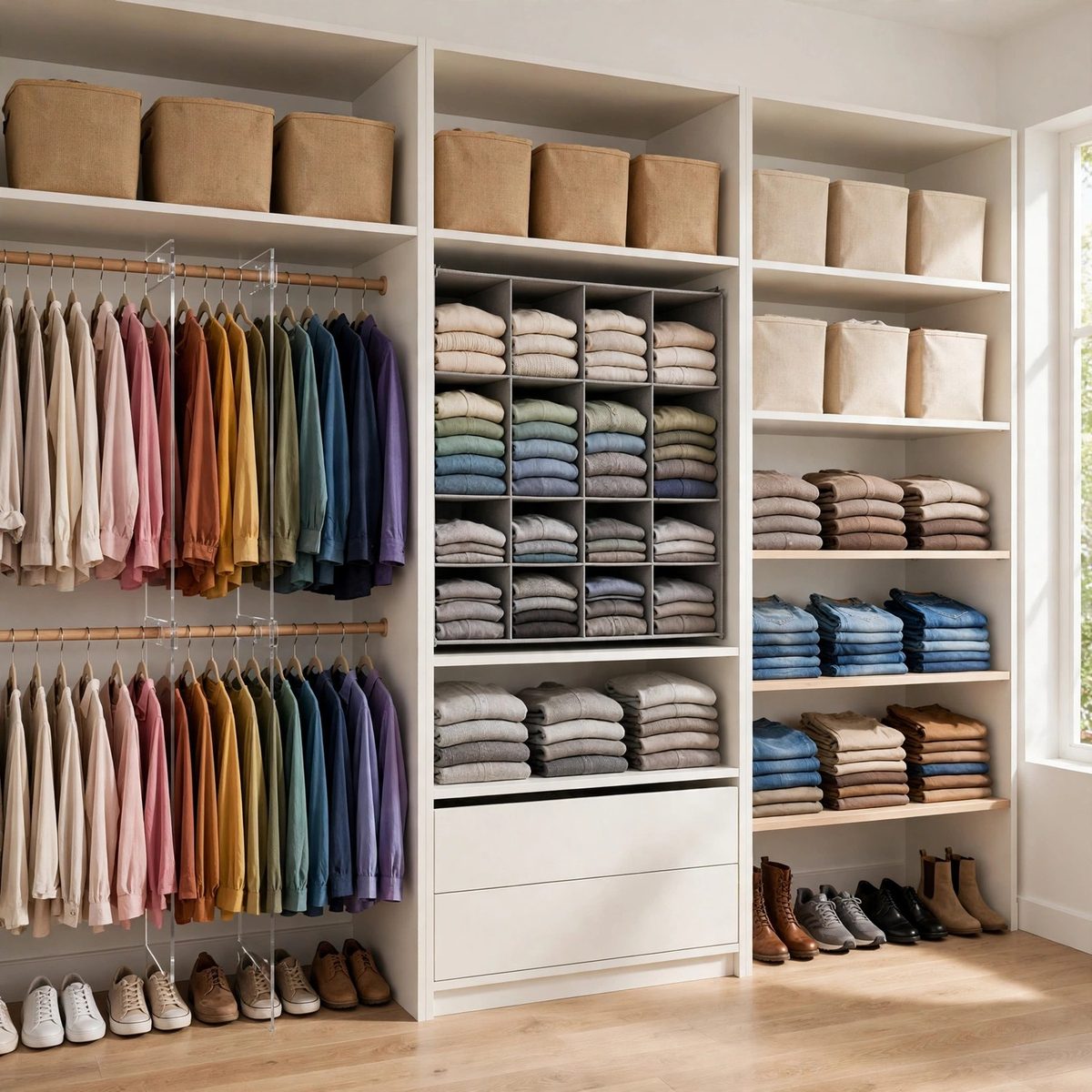
Most closets are organized by accident — clothes land wherever there's space, and "organized" means the door closes. Closet zoning is a different approach: divide the closet into functional zones based on how you actually use your clothes, so every item has a logical home and getting dressed stops being a treasure hunt. Here's how it works.
What Is Closet Zoning?
Zoning means assigning each area of your closet to a specific use: work clothes in one section, casual in another, seasonal storage up high, accessories in a defined spot. Instead of one undifferentiated rod, you get a map — and a map is what keeps the closet organized after the initial effort, because every item has a correct zone to return to.
The zones that work for most people are based on two axes: frequency of use (daily vs. occasional vs. seasonal) and category (work, casual, formal, active). Your prime real estate — eye-level rod space and easy-reach shelves — goes to daily-wear categories. Occasional and seasonal items go high, low, or into secondary storage like under-bed bags.
Zone 1: The Daily Rotation (Prime Rod Space)
This is the section you reach for every morning — work clothes, everyday casual, whatever you wear most. It gets the most accessible rod space: eye level, easy reach, well lit. Within this zone, subdivide with rod dividers by category or by owner — the TidyHaven Closet Rod Dividers, 8 Pack clip onto the rod with blank label tabs you can customize.
Hangers matter most here because this zone is the densest. Slim velvet hangers take a fraction of the space of bulky plastic ones and keep clothes from sliding off. The TidyHaven Slim Velvet Hangers, 30 Pack can recover significant rod length in a crowded daily zone. Keep this zone lean: if you haven't worn something in this section for a month, it probably belongs in a different zone.
Zone 2: Folded Storage (Shelves and Hanging Organizers)
Not everything should hang. Knitwear stretches on hangers; jeans and t-shirts take less space folded; sweaters pile better than they hang. This zone covers your shelves and any hanging shelf organizers — folded items stacked by category, one stack per shelf section.
Hanging shelf organizers are ideal here because they add shelf space without construction — six fabric tiers on a rod section convert hanging space you weren't using into folded storage. The NeatNest Hanging Closet Shelves, 6 Tier adds six shelves to any standard rod. Keep stacks short (four to six items) — tall stacks topple when you pull from the middle. File-folding (folding items so they stand upright like files) lets you see every item in a stack without digging.
Canvas bins work on the high shelf for this zone — folded off-season knits, extra linens, or accessories in labeled bins. The OrderlyOak Canvas Wardrobe Storage Bins, 4 Pack have label windows so you can identify contents without pulling the bin down.
Zone 3: Seasonal and Occasional (High, Low, and Away)
Seasonal clothes — heavy coats in summer, shorts in winter — don't deserve prime space. Neither do occasional items: formal wear, ski gear, the suit you wear twice a year. This zone lives in the hardest-to-reach places: the top shelf, the back of the closet, and under the bed.
Under-bed storage bags are the seasonal zone's most useful ally — flat bags with clear windows hold off-season clothes invisibly under the bed. The NeatNest Under-Bed Storage Bags, 2 Pack have clear top windows so you can verify contents without unpacking. Rotate twice a year: when the season changes, swap the seasonal zone with the daily zone. The swap takes an hour and keeps prime space matched to what you're actually wearing.
Label seasonal containers with the season and year. It sounds fussy, but "Winter 2026" on a bin means you never open three wrong bins looking for your coat.
Zone 4: Shoes and Accessories (Floor and Door)
Shoes belong on the closet floor or on a low shelf — never piled, because piles hide pairs and damage shoes. Line them up in a single row, or use the floor space under short-hang sections where nothing else fits. If floor space is tight, a hanging shoe organizer on the door or a slim rack keeps pairs visible and paired.
Accessories — belts, scarves, bags — need a defined spot or they migrate everywhere. Hooks on the closet wall or inside the door handle belts and scarves; the top shelf or a hanging organizer's side pockets hold bags. Give accessories one home and enforce it: a scarf on the floor means the hook system needs adjusting, not that scarves live on floors now.
Zone 5: The Launch Pad (Tomorrow's Outfit)
This is the smallest zone and the one that saves the most morning time: one hook, one hanger, or one shelf section designated for tomorrow's outfit. Laying out clothes the night before eliminates morning decision fatigue and stops the "tried on three things, they're all on the bed" mess. A single hook on the closet door or a valet hanger is all it takes.
The launch pad also serves as a triage point. Clothes that need washing go to the hamper immediately after wearing — never to the chair, the floor, or back on a hanger. The "worn once, not dirty" middle ground gets the launch-pad hook for one re-wear, then the hamper. This tiny rule eliminates the bedroom chair pile that plagues so many closets.
Setting Up Zones in Different Closet Types
Reach-in closets (the standard): One rod, one shelf. Daily zone on the rod's most reachable section, folded zone on the shelf above and in a hanging organizer, seasonal zone on the high shelf's far ends and under the bed. Rod dividers mark the zone boundaries visibly.
Walk-in closets: Assign walls by zone — one wall for daily hanging, one for folded storage and shoes, the back wall for seasonal. Walk-ins tempt you to spread out; resist it. Keep daily zones near the entrance so you're not walking the full closet every morning.
Shared closets: Split vertically, not by zone type — each person gets a full column (rod section, shelf section, floor section) rather than one person getting all the rod and the other getting all the shelves. Within each column, apply the same zone logic. Rod dividers with names or colors mark the boundary clearly.
Small closets: Prioritize ruthlessly. Daily zone gets the rod; everything else goes to secondary storage (under-bed, over-door, dresser). A small closet can't hold a full wardrobe — it holds the current rotation, and the rest lives elsewhere. That's not failure; that's zoning working correctly.
Maintaining the Zones
Zones stay organized through three small habits:
- The nightly return: Clothes go back to their zone when they come off — hamper, hook, or hanger. Two minutes, done.
- The monthly zone check: Once a month, scan each zone. Anything in the wrong zone goes home; anything unworn for a season gets reassigned to seasonal storage or donated.
- The seasonal rotation: Twice a year, swap seasonal and daily zones. It's also the natural moment to audit — if you didn't wear it this season, you won't wear it next season.
Start with the zone that causes the most friction — usually the daily rotation — and expand from there. You don't need to zone the whole closet in one day; one zone that works beats five zones that don't. Find the pieces to build your zones in our Closet & Wardrobe Organizers collection.