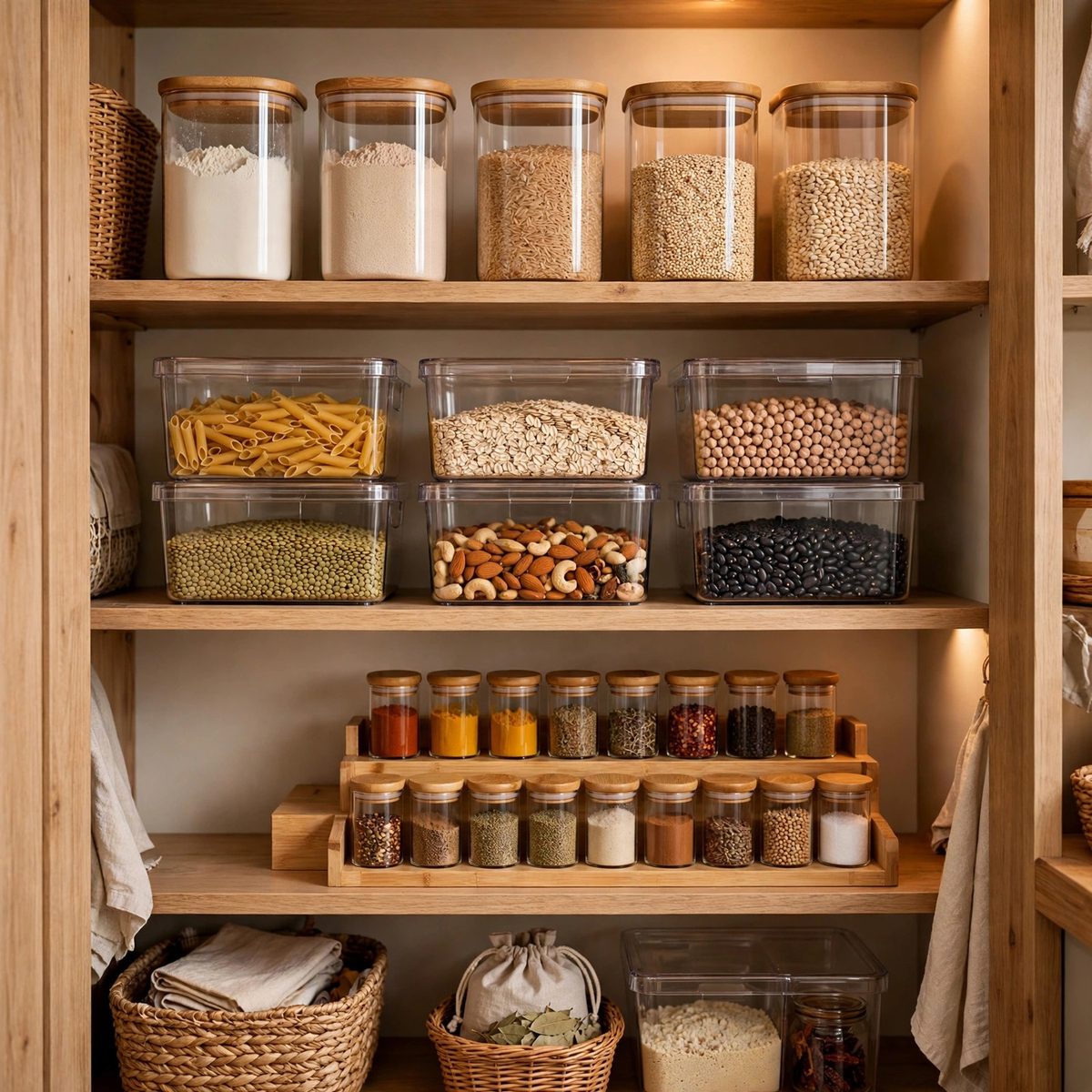
A pantry only feels organized when everything has a visible, reachable home. This guide covers the three pillars of pantry storage — organizer bins, airtight containers, and specialty racks — plus how to measure your shelves and choose pieces that work together. See the full range in our Kitchen & Pantry Storage collection.
Measure First: The Step Everyone Skips
Measure the width, depth, and height of each pantry shelf before buying anything. Most pantry shelves are 12–16 inches deep and spaced 12–15 inches apart, but yours may differ — and bins that are an inch too tall will make a whole shelf unusable. Note any awkward spots: narrow gaps beside the door, deep corners, and shelves above eye level where visibility matters most. These measurements are your shopping list; an organizer that doesn't fit your numbers is a return waiting to happen.
Organizer Bins: The Foundation Layer
Clear stackable bins are the fastest way to bring order to a pantry. They group small items (snack packs, packets, pouches) into grabbable units, and because they're clear, you can see what's inside without pulling the bin off the shelf. Built-in handles make them easy to slide out, and graduated sizes let you match bin to category — small bins for spice packets and vitamins, large ones for baking supplies.
Look for stackability with a lip or ridge so stacked bins don't slide, and for label plates or label-ready surfaces so the household agrees on where things live. Graduated sets are usually cheaper than buying individually and cover a pantry in one purchase. The OrderlyOak Pantry Organizer Bins, 6 Pack come in graduated sizes with built-in handles and label plates, which covers most standard pantries in a single set.
Airtight Containers: Freshness and Decanting
Decanting dry goods — flour, sugar, rice, cereal, coffee — into airtight containers is the single biggest visual upgrade a pantry can get. Uniform containers turn a shelf of mismatched boxes and bags into a clean, readable row, and the airtight seal keeps staples fresh longer while keeping pantry moths out. Snap-lock lids with silicone seals are the mechanism to look for; press-on lids lose their seal over time.
Buy a nesting set in graduated sizes so small containers hold baking powder and large ones hold flour without wasted space. Clear bodies matter here too — being able to see that the rice is running low saves a grocery trip. The NeatNest Airtight Food Storage Set, 12 Piece nests by size with white snap-lock lids and silicone seals. One tip: don't decant everything at once. Start with your five most-used dry goods, and expand once the habit sticks.
Specialty Racks: Spices, Cans, and Under-Sink
Specialty racks solve the two places general bins can't reach. A tiered spice rack keeps small jars visible in two stepped rows instead of a single unreadable line — check that the tiers suit the height of your jars. The TidyHaven 2-Tier Spice Rack Organizer uses a stepped bamboo design that fits most pantry shelves.
Can dispenser racks use gravity: new cans load at the top, old ones roll forward, so nothing expires in the back. Stackable designs let you scale up as the collection grows. The NeatNest Stackable Can Dispenser Rack holds rows of cans on angled shelves. For the cabinet under the sink — plumbing and all — a two-tier rack with sliding baskets works around pipes instead of fighting them; the OrderlyOak Under-Sink Organizer Rack is designed for exactly that space.
Deep Shelves and Awkward Corners
Deep pantry shelves waste space because items get lost in the back. The fix is pull-out logic: put bins or baskets on deep shelves so you slide the whole unit out instead of reaching in. Narrow gaps beside the door suit slim rolling carts or wall-mounted racks. Corners benefit from turntables (lazy Susans) that spin the back row forward — especially useful for oils, vinegars, and condiments that otherwise disappear.
Above-door space is another overlooked zone: a shallow rack mounted on the inside of the pantry door holds spices, wraps, and packets without touching a single shelf. Measure the door's interior clearance first so the rack doesn't hit shelves when the door closes.
Making It All Work Together
The layering that works: bins and containers on eye-level shelves where visibility matters, specialty racks on lower shelves for heavy or dense items, and like-with-like grouping everywhere (all baking together, all snacks together). Label everything — a label maker costs little and is the difference between a system and a snapshot. Leave one empty shelf or half-shelf of slack; pantries fill to capacity, and slack absorbs the next grocery run without breaking the system. Shop the full range in our Kitchen & Pantry Storage collection.