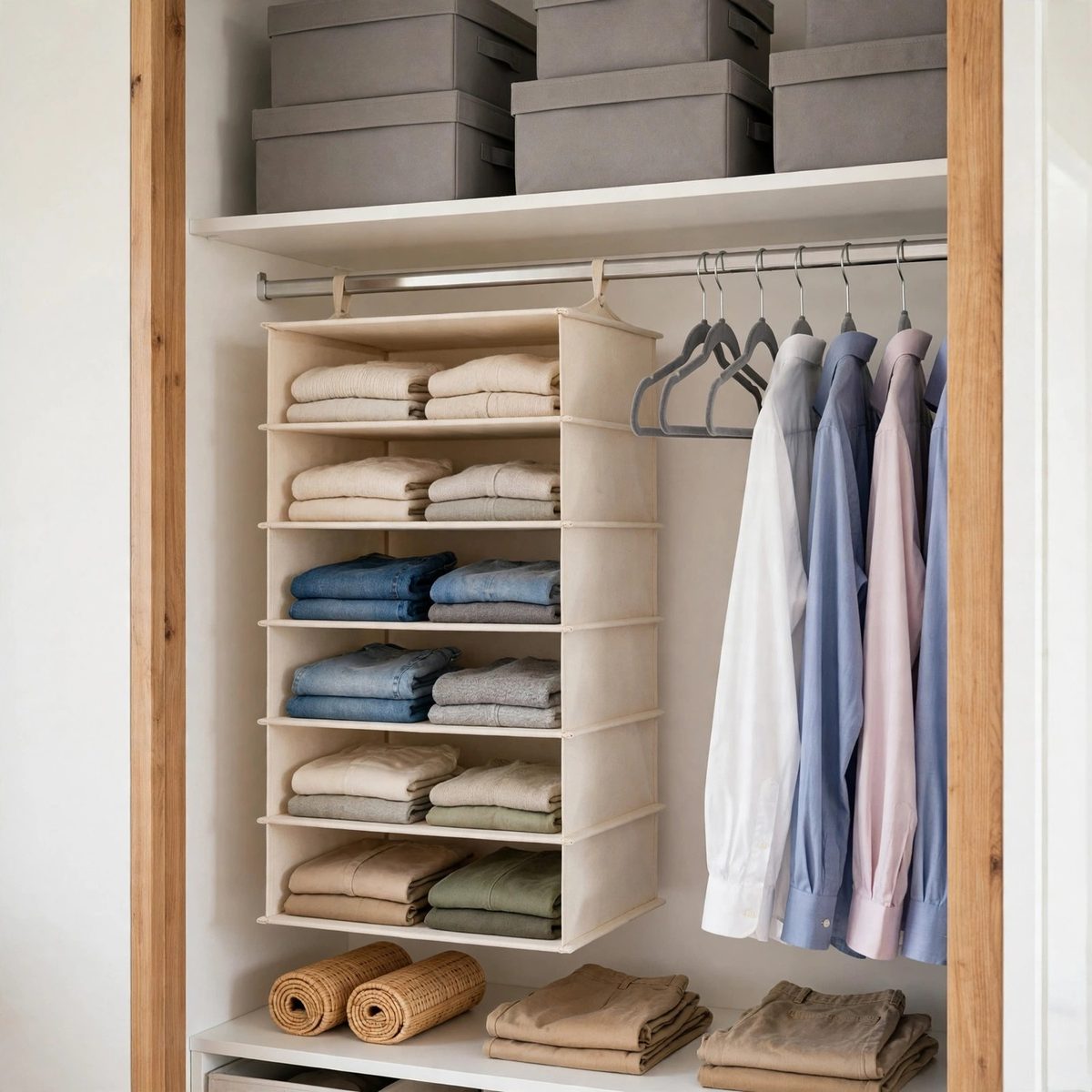
A closet that works is rarely about square footage — it's about matching the right organizer to the way you actually use the space. This guide walks through the three main closet organizer types (hanging shelves, storage bins, and hangers), how to measure, and what to look for before you buy. Browse the full range in our Closet & Wardrobe Organizers collection.
Start with a Map of Your Closet
Before you look at a single product, take stock of what you have. Most closets break down into three zones: hanging space (a single or double rod), shelf space (the high shelf above the rod and any built-ins), and floor space (often wasted). Pull everything out of one section at a time and sort by category — shirts, pants, folded items, shoes, accessories — so you know what volume each category needs. Count your hanging garments too; a crowded rod is the fastest way to ruin an organized closet.
Next, measure. Record the rod length (how many inches of hanging space you actually have), the distance from rod to floor, and the width and depth of any shelves. Hanging organizers need at least 40 inches of vertical clearance to hang properly; bins need accurate shelf depth so they don't overhang. These numbers are your buying checklist — if an organizer's proposed dimensions don't fit your numbers, keep looking.
Hanging Closet Shelves: Instant Vertical Storage
Hanging shelf organizers are fabric shelves that hook over your closet rod, adding instant stacked storage without tools or drilling. They're ideal for items that don't need a hanger — folded sweaters, jeans, t-shirts, handbags, or shoes — and for converting long-hang sections into double-duty storage.
When comparing hanging shelves, check the number of tiers and the depth of each shelf; deeper shelves (around 12 inches) hold folded sweaters without spilling, while narrower ones suit shoes and accessories. Look at the hook or strap design — wide, adjustable straps distribute weight better than thin hooks, especially once shelves are loaded. Side pockets are a useful bonus for small accessories. For a solid starting point, see the NeatNest Hanging Closet Shelves, 6 Tier, which adds six fabric shelves to any standard rod.
One honest limitation: hanging shelves take up rod space. If your rod is already packed, pair them with slim hangers or dividers instead of adding shelves to a crowded rod. Which brings us to…
Rod Dividers and Slim Hangers: Small Upgrades, Big Difference
Closet rod dividers are circular tags that clip onto the rod and separate clothing by category, owner, or season. They're cheap, need no tools, and stop the slow drift that turns "work shirts / casual shirts" into one blended row. Blank label tabs let you write your own categories and rearrange them as your wardrobe changes. The TidyHaven Closet Rod Dividers, 8 Pack are a simple way to add visible order to a busy rod.
Hangers are the other silent space thief. Bulky plastic hangers eat an inch or more each; slim velvet hangers take a fraction of that and their non-slip surface keeps clothes from sliding onto the floor. Thirty slim hangers can recover a surprising amount of rod length — often enough room to add that hanging shelf organizer after all. If you're reorganizing on a budget, start here: new hangers and dividers cost little and change the whole closet immediately. The TidyHaven Slim Velvet Hangers, 30 Pack are built exactly for this job.
Storage Bins: Corrals for Shelves and Closet Floors
Bins turn open shelves and closet floors into defined compartments. Canvas wardrobe bins are the workhorse choice — they're soft enough to squeeze onto high shelves, sturdy enough to hold folded clothes, and label windows let you identify contents without pulling the bin out. Look for reinforced handles (you'll grab them constantly) and structured sides that don't collapse when half empty.
Match bin size to shelf: measure shelf depth first and choose bins that sit flush or slightly inside the shelf edge so nothing tips out. On closet floors, stackable bins with lids protect off-season clothes from dust. The OrderlyOak Canvas Wardrobe Storage Bins, 4 Pack include stitched label windows and reinforced handles, and stacking two by two uses vertical space on deep shelves.
Under-Bed Storage: The Closet's Overflow Valve
When the closet is full, under-bed storage absorbs seasonal clothes, extra linens, and items you need but rarely reach for. Flat storage bags with clear top windows let you see contents without unpacking; zipper closures keep out dust. Measure your bed-frame clearance before buying — most bags need 6–7 inches of height. The NeatNest Under-Bed Storage Bags, 2 Pack are a straightforward overflow option with clear windows and carry handles.
Putting It Together
A practical sequence: slim hangers and rod dividers first (cheap, instant), then hanging shelves for vertical storage, then bins for the remaining shelves and floor. Measure twice, buy once, and leave about 10% of your new capacity empty — closets fill to whatever space exists, and a little breathing room keeps the system working. Start with the Closet & Wardrobe Organizers collection to find the pieces that fit your measurements.