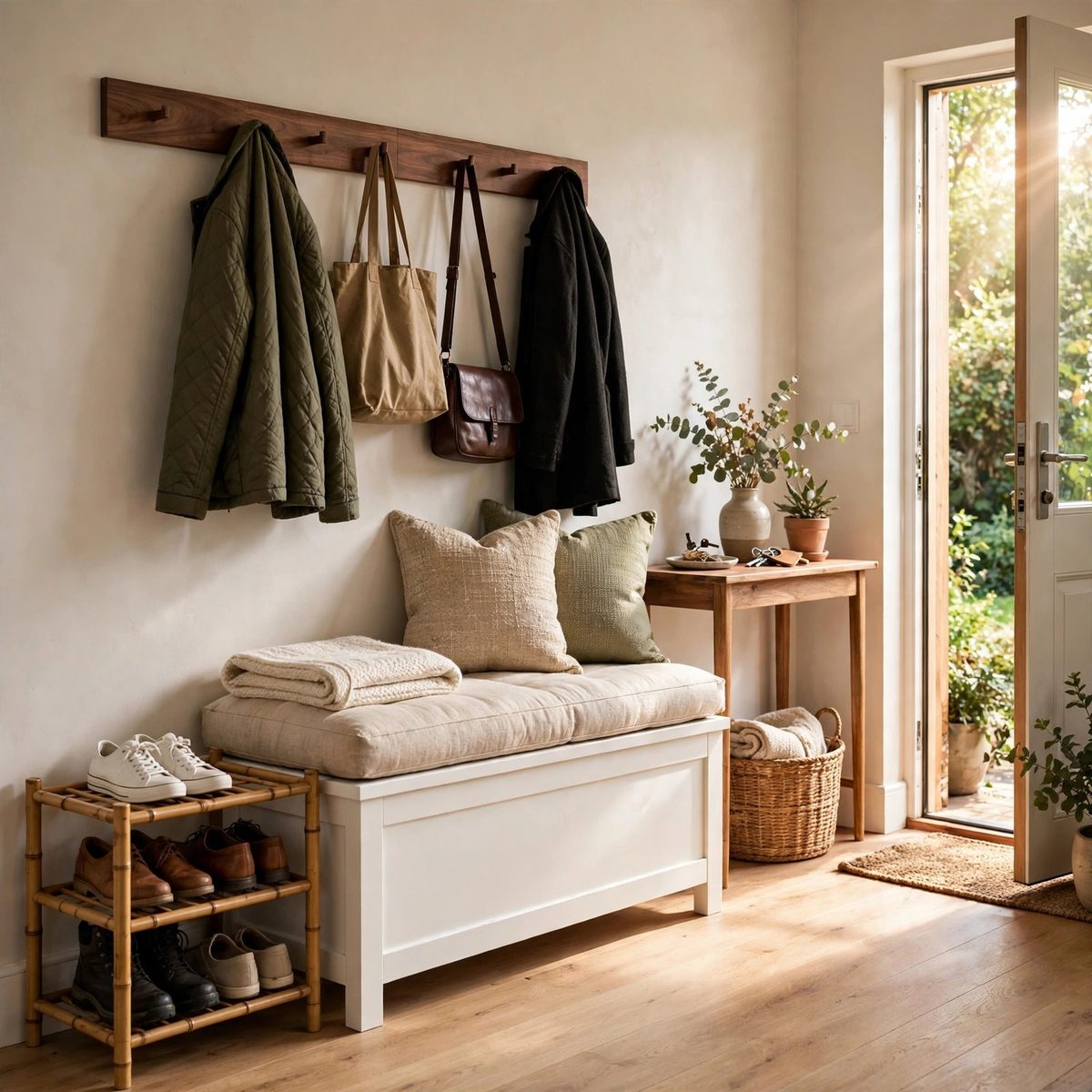
The entryway is the first space you see when you come home and the last one you touch before leaving — which is why it becomes a drop zone for shoes, coats, bags, and keys. This guide covers storage benches, shoe racks, coat hooks, mudroom cubbies, and console tables, and how to build a system that catches the daily mess. Explore the range in our Entryway & Mudroom Storage collection.
Map Your Entryway Traffic
Watch how your household actually uses the entryway for a few days. Where do shoes land? Where do coats get tossed? Where do keys and mail end up? The answers tell you which organizer to buy first. Measure the wall length, depth, and ceiling height of the space — entryways are often narrow, so a piece that's an inch too deep can block the walkway. A comfortable walkway needs at least 36 inches of clear passage.
Storage Benches: Sit, Store, and Tidy
A storage bench is the entryway multitasker: you sit to put on shoes, and shoes or seasonal gear hide inside. Two-door benches with interior shelves keep footwear and accessories out of sight; a cushioned top makes the bench genuinely comfortable for daily use. Brushed nickel or matte hardware resists fingerprints better than polished finishes.
Size the bench to your household — a bench that fits the entryway but only holds two pairs of shoes won't fix anything for a family of four. Interior shelves that adjust or come out make the bench flexible for boots versus sneakers. The TidyHaven Entryway Storage Bench, 2 Door combines a cushioned top with interior shelves and two-door access. Place it where you naturally pause: beside the door you use most.
Shoe Racks and Coat Hooks: The Daily Drop Zone
Shoes are the entryway's biggest offender because everyone owns pairs they wear daily and pairs they wear occasionally. A three-tier rack separates the two: daily shoes on the middle shelf where they're easy to grab, less-worn pairs on top and bottom. Slatted shelves let dirt fall through instead of collecting, and bamboo suits entryways because it wipes clean. The NeatNest 3-Tier Shoe Rack Organizer holds pairs across three slatted bamboo shelves.
Coats need hooks, not a closet hunt — a wall-mount rail with five double hooks handles a family's worth of jackets, bags, and dog leashes. Mount it into wall studs at a height reachable by the shortest regular user (usually 48–60 inches from the floor). Double hooks are worth it: coat on one, bag on the other. The OrderlyOak Wall-Mount Coat Hook Rail, 5 Hook mounts on a walnut rail with matte-black double hooks. Add a small tray or bowl on a nearby surface for keys and mail, and the drop zone is complete.
Mudroom Systems: When the Entryway Needs to Work Harder
A mudroom cubby tower is a full entryway station: open cubbies for baskets and bags, side hooks for coats, and a bench base for sitting. Six cubbies suit most families — assign one per person and the "whose shoes are these" problem disappears. Towers work well against a wall with at least 30 inches of depth clearance so the bench base doesn't crowd the walkway.
Pair cubbies with baskets for the small stuff (gloves, hats, sunscreen) so open shelves stay tidy. If a full tower is too much for your space, a console table with a lower shelf does a lighter version of the job: keys and mail on top, baskets below. The TidyHaven Mudroom Cubby Storage Tower combines six cubbies, side hooks, and a bench base, while the NeatNest Slim Entryway Console Table offers a narrow footprint with a lower shelf for tighter halls.
Small Entryways and Rental-Friendly Options
Not every entryway has room for a bench and a tower. In tight halls, go vertical and narrow: a slim console table (under 12 inches deep) for keys and mail, a wall-mount hook rail for coats, and a single-tier shoe solution that hugs the wall. Over-the-door hooks add hanging space with zero footprint and no drilling — ideal for renters.
Renters should favor freestanding pieces over wall-mounted ones: a shoe rack, a narrow console, and a coat stand move with you and need no landlord approval. If you do mount a hook rail, use the existing studs and keep the hardware — patching a few screw holes at move-out is standard.
Building the Complete Entryway
The sequence that works: hooks and a shoe solution first (they handle the daily mess), then a bench or console for keys and sitting, then cubbies or towers if the household needs assigned storage. Give every family member one hook and one shelf — assigned homes stop the pile from reforming. Do a weekly five-minute reset: shoes back on the rack, coats on hooks, mail sorted. The entryway stays tidy not from the furniture but from the habit it supports. Build your setup from our Entryway & Mudroom Storage collection.