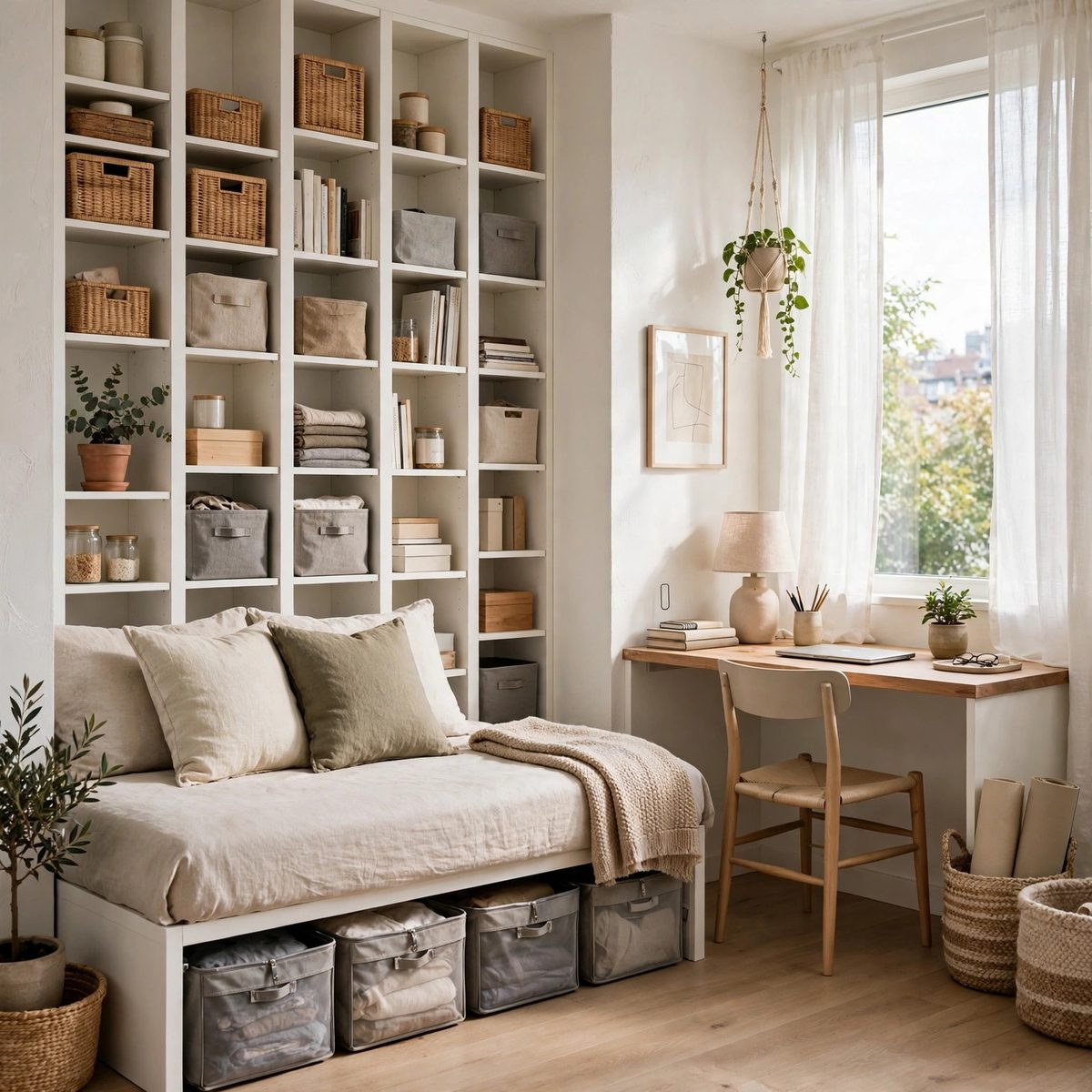
Living in a small space isn't a problem to solve — it's a design constraint to work with. Apartments, studios, and compact homes force a clarity that large homes rarely demand: every item has to earn its place, and every square foot has to pull its weight. This guide covers the principles, room-by-room tactics, and habits that make small spaces feel calm instead of cramped.
The Small-Space Mindset: Less Stuff, Smarter Placement
The single biggest lever in a small space isn't storage furniture — it's owning less. Before buying a single organizer, walk through each room with a critical eye and remove what you don't use, don't love, or have duplicates of. Small spaces have no room for "just in case" items; a duplicate kitchen gadget or a box of cables you can't identify is square footage you could be living in. The goal isn't minimalism as an aesthetic — it's making sure everything you keep serves a purpose.
Once you've edited, the second principle is vertical thinking. Small rooms have the same ceiling height as large ones, which means wall space and high shelves are free real estate. Tall, narrow storage uses the vertical dimension without eating floor space, and wall-mounted hooks and shelves keep the floor clear — which makes a room feel larger than any furniture arrangement can.
The third principle is dual-purpose everything. In a small space, single-use furniture is a luxury. A storage bench is seating and a closet; a rolling cart is a nightstand, a pantry shelf, and a bathroom caddy depending on the day; an over-toilet shelf turns dead air into a linen closet. When you evaluate a purchase for a small space, ask what two jobs it does.
The Living Room: Zones in an Open Space
Small living rooms suffer from one problem: every activity happens in the same square footage. Create zones with furniture placement and storage rather than walls. A console table behind the sofa defines the boundary between living and sleeping areas in a studio, and its lower shelf holds baskets for blankets and remotes. Wall-mounted hooks near the door keep coats off the sofa.
Choose storage that hides visual noise. Open shelves in a small living room can feel chaotic because everything is always visible; closed storage — benches with doors, baskets in cubbies — keeps the room calm. If you love the look of open shelves, limit them to one wall and keep them edited: books and a few objects, not a museum of everything you own.
Media and cords are the living room's hidden clutter. A cable management box tames the tangle behind the TV stand, and routing cords along the back of furniture keeps them out of sight. For a clean setup, the NeatNest Cable Management Box, Large gathers power strips and adapters into one ventilated container so the entertainment corner stays tidy.
The Bedroom: Closets, Under-Bed, and the Chair
Bedrooms in small homes are usually short on closet space, so the closet has to be ruthlessly efficient. Slim hangers recover rod length; hanging shelf organizers add folded storage without construction; bins corral the high shelf. The TidyHaven Slim Velvet Hangers, 30 Pack can free up enough rod space to make a crowded closet breathable, and rod dividers keep categories from blending together.
Under-bed storage is the bedroom's secret weapon. Flat storage bags with clear windows hold off-season clothes, extra bedding, and luggage you rarely need — all invisible during the day. Measure your bed-frame clearance first; most bags need 6–7 inches. The NeatNest Under-Bed Storage Bags, 2 Pack are designed for exactly this job.
And then there's the chair — every small bedroom has one, the chair where clothes accumulate. The chair exists because there's no designated home for "worn once, not dirty" clothes. Fix it with a hook or two on the bedroom door or a small valet tray: worn-once clothes get a hook, everything else goes in the hamper. It's a tiny system that eliminates a daily eyesore.
The Kitchen: Every Inch Counts
Small kitchens punish inefficiency. Start with the counter: keep only what you use daily on it (coffee maker, maybe a knife block) and move everything else into cabinets. Clear bins inside cabinets group small items so you're not digging behind the cereal for the baking powder. Tiered racks double the usable depth of deep shelves by making the back row visible.
The pantry — whether it's a closet or two shelves — benefits most from decanting. Uniform airtight containers turn mismatched boxes into a clean, readable row and keep staples fresh. The NeatNest Airtight Food Storage Set, 12 Piece nests by size so small containers don't waste shelf space. Under-sink space, often wasted around pipes, can hold cleaning supplies with a sliding two-tier rack like the OrderlyOak Under-Sink Organizer Rack.
Use the backs of cabinet doors too — mounted racks inside doors hold spices, wraps, and lids without touching shelf space. And audit your tools: a small kitchen needs one good knife, not a block of twelve; one pot and one pan in the right sizes, not a tower of specialty cookware. Every duplicate you remove is shelf space you get back.
The Bathroom: Small but Mighty Storage
Small bathrooms have the least storage and the most daily-use items, so every organizer has to earn its footprint. A divided vanity tray corrals the counter into categories — the TidyHaven Bamboo Vanity Organizer Tray keeps five categories in one footprint. The under-sink cabinet, usually a jumble around pipes, becomes usable with a sliding two-tier organizer. Over-toilet shelves add a full storage column where none existed: towels, extra toiletries, and a basket or two on three tiers.
Rolling carts are the small-bathroom hero for renters — four narrow tiers that slide beside the vanity or between fixtures, no mounting required. The NeatNest Rolling Bathroom Cart, 4 Tier fits gaps most furniture can't. Declutter ruthlessly here: expired products and duplicates multiply in small bathrooms, so audit every few months.
The Entryway: First Impressions, Daily Function
In a small home, the entryway is often a wall, not a room — which makes it even more important to get right. A slim console table with a lower shelf gives keys and mail a home without blocking the walkway; the NeatNest Slim Entryway Console Table is built for narrow halls. A wall-mount coat hook rail handles jackets and bags vertically — the OrderlyOak Wall-Mount Coat Hook Rail, 5 Hook holds five hooks on one rail. A compact shoe rack keeps footwear off the floor.
The rule for small entryways: nothing lives on the floor that could live on a hook, rail, or shelf. Floor space is the scarcest resource, so vertical storage wins every time.
The Home Office Corner: Working in Shared Space
Many small homes don't have a dedicated office — the desk shares space with the bedroom or living room. A compact desk organizer set keeps supplies in one footprint; the OrderlyOak Desk Organizer Set, 5 Piece covers pen cup, trays, file holder, phone stand, and notes in a single purchase. A monitor stand with a drawer raises the screen to eye level while adding hidden storage underneath — see the OrderlyOak Monitor Stand with Drawer Organizer.
When the workday ends, the desk should visually close. A file sorter that corrals loose paper, a cable box that hides the tangle, and a quick wipe-down turn a workspace back into a living space. In shared rooms, the ability to "close up shop" is what keeps work from colonizing the whole home.
Habits That Keep Small Spaces Working
Furniture and organizers set up the system; habits keep it running. Three habits matter most in small spaces:
- One in, one out. Small spaces have a hard capacity limit. When something new comes in, something old leaves. This single rule prevents the slow accumulation that chokes small rooms.
- The nightly reset. Five minutes before bed: dishes in the sink, clothes in the hamper or on their hook, surfaces cleared. A small space that's reset nightly feels twice as large as one that's been accumulating for a week.
- Weekly zone check. Once a week, pick one zone — a drawer, a shelf, the entryway — and put everything back where it belongs. Small corrections beat big purges.
Buying Smart for Small Spaces
Before any purchase, measure the space and the item's proposed dimensions — returns are expensive in time and shipping. Favor pieces that do two jobs, choose closed storage for visual calm in living areas, and leave 10% of every new storage system empty; a system at 100% capacity has nowhere to absorb the next grocery run or gift. Start with the room that bothers you most — small wins build momentum. Our Closet & Wardrobe Organizers collection is a good place to begin, since bedroom closets are where most small-space frustration starts.